A kitchen or bathroom can feel personal without relying on unusual materials everywhere. Often the distinctive part is how familiar elements are arranged: a useful stone ledge, an intentionally placed tile pattern, or cabinetry planned around a particular routine. Start with the way the rooms need to work, then use a few details to give them character.
Turn a daily routine into a design feature
Consider a preparation area with room for the tools you use most, a vanity organized around shared use, or a clear place to set groceries and bags. Design the storage and nearby surface around that activity. A feature that belongs to your household can feel more distinctive than an eye-catching addition borrowed from an unrelated room.
Use tile placement deliberately
A tile pattern can frame a backsplash area, emphasize a shower wall, or give a floor a clear direction. Review where the pattern begins and ends, how it meets cabinetry, and what happens at corners. Keep the surrounding finishes quieter if the tile is doing the visual work. Approve a layout before installation rather than assuming the effect will emerge on site.
Give stone a role beyond color
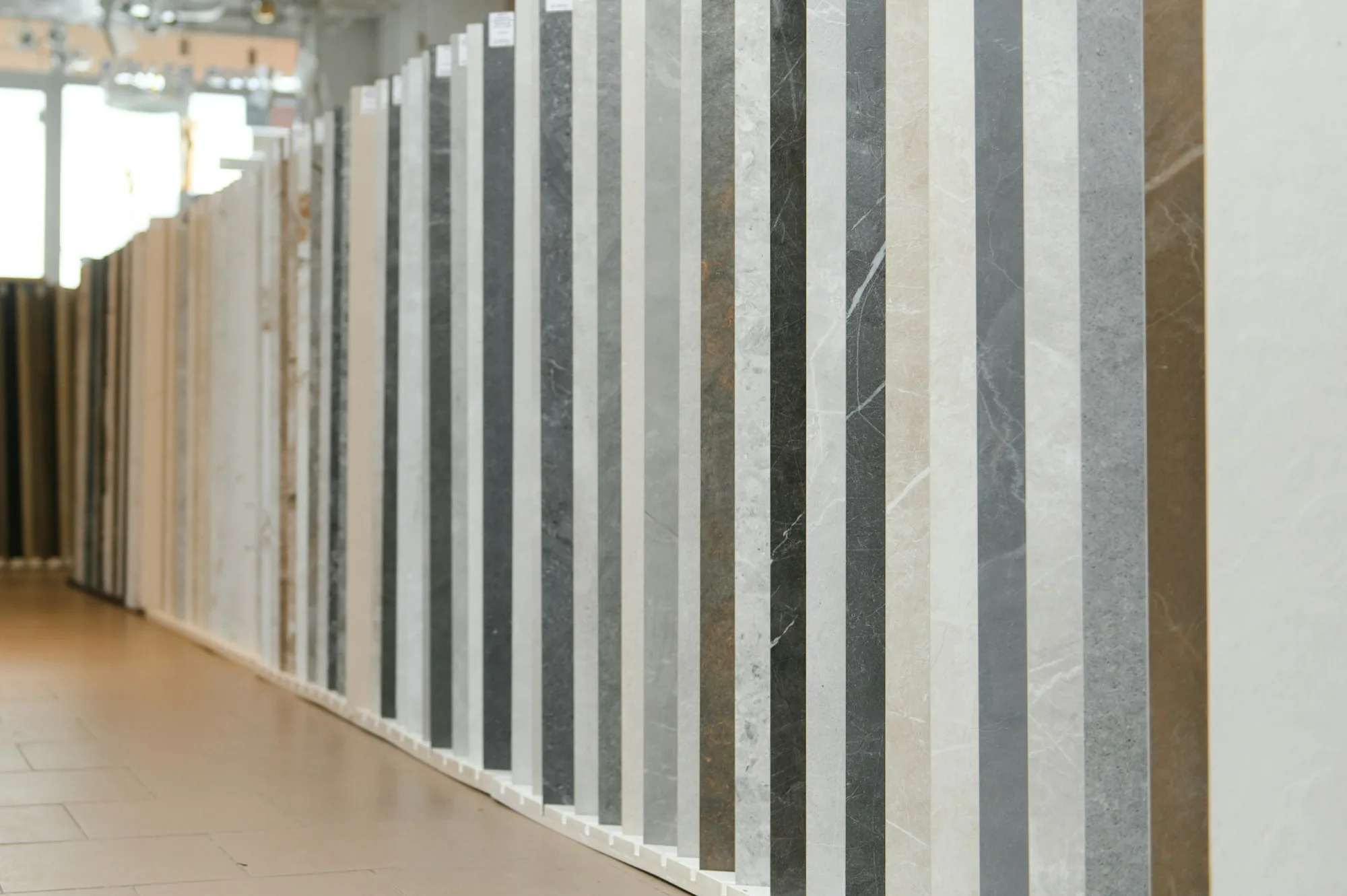
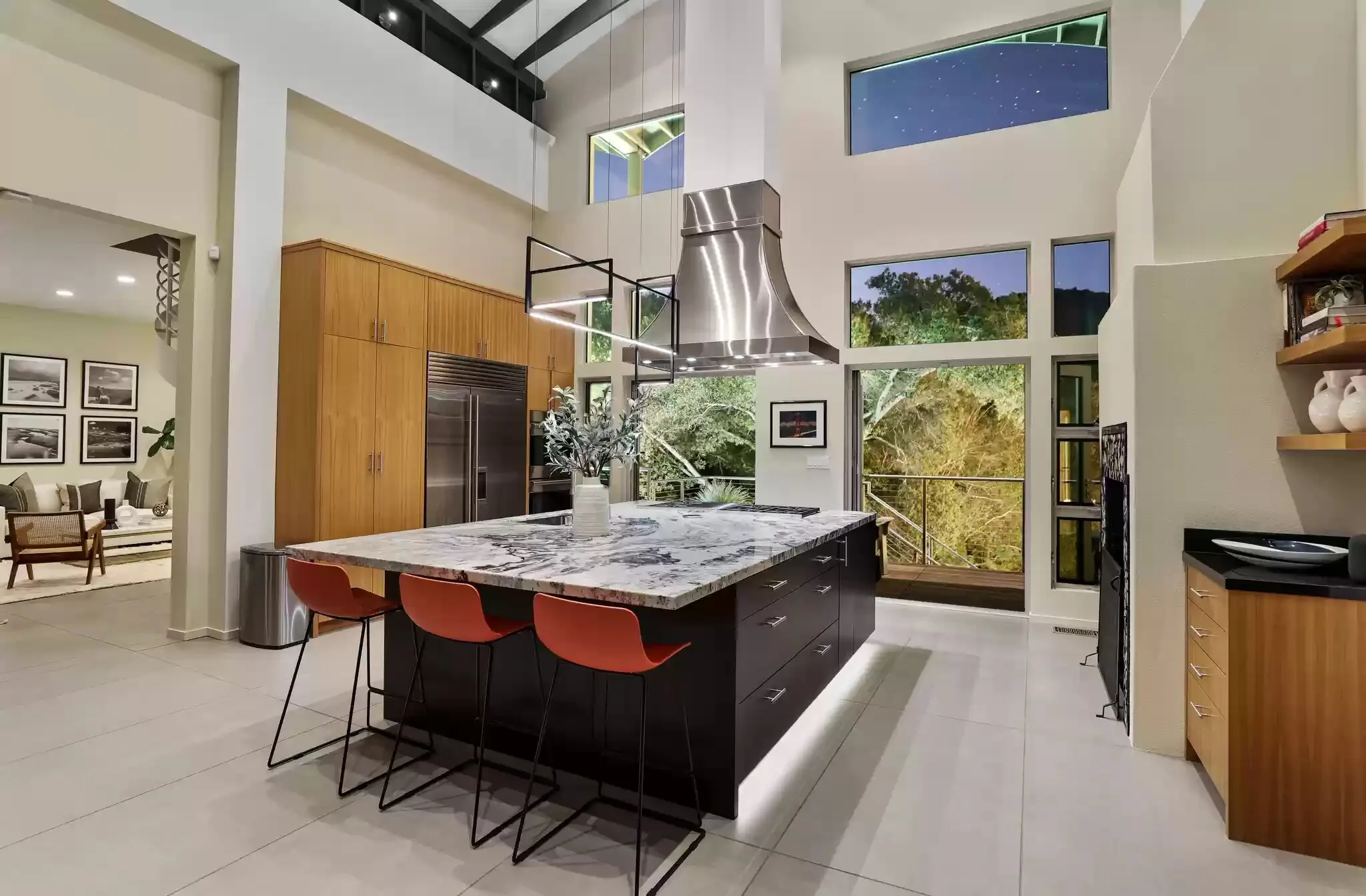
A stone countertop can connect the room through its finish, edge, pattern orientation, and relationship to nearby materials. Discuss the actual slab and proposed seam locations with the fabricator. A full-height backsplash or waterfall end may suit some designs, while a simpler treatment may better serve another. Let the choice follow the room rather than treating either detail as essential.
Create continuity without repetition
Connect the kitchen and bathroom through a related tone, metal finish, or approach to texture, then adapt the materials to each location. The rooms do not need matching counters or tile to belong to the same home. Compare selections together so that any deliberate difference feels compatible rather than accidental.
Keep the unusual details buildable
Bring custom shelves, niches, edge profiles, and fixture positions into the planning conversation early. Ask how they affect support, waterproofing where applicable, access, cleaning, and fabrication. A distinctive detail is more successful when it is comfortable to use and can be executed clearly by the installation team.
Plan your next step
The most personal redesign makes everyday life feel considered. Choose one or two features that express your priorities, coordinate their construction, and let the rest of the room give them the space to work.
For help with tile installation or custom stone surfaces, contact DC Tile and Stone to discuss your project.