Shower slabs and tile can both create a considered bathroom, but they lead to different design and installation decisions. Large panels can emphasize continuous surfaces, while tile offers many ways to control pattern, scale, and detail. Compare the complete shower assembly, the practicalities of the room, and the care routine before choosing by appearance alone.
Decide what you want the walls to express
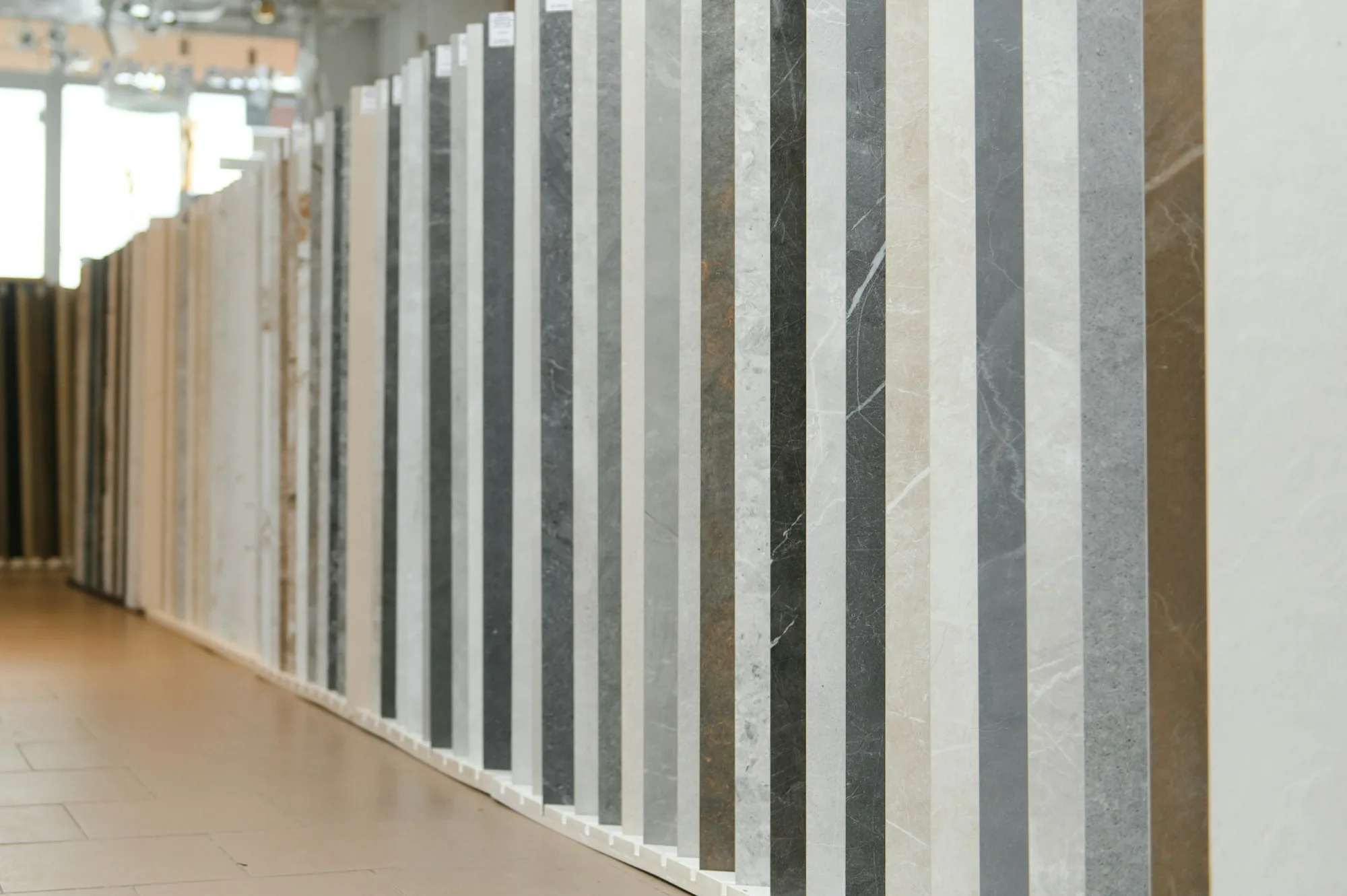
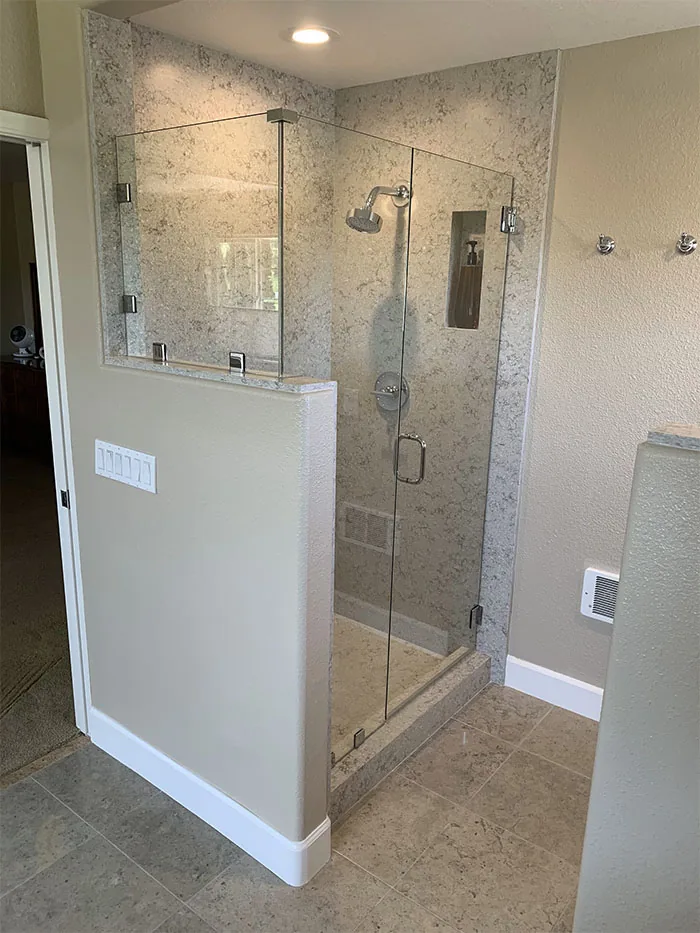
A slab design can give a wall a broad, uninterrupted visual field, although seams may still be needed. Tile can introduce a grid, a mosaic, or a deliberate change of scale. Look at examples similar in size to your shower. A dramatic material may look different across a narrow enclosure than it does in a large display.
Keep waterproofing separate from the finish choice
The visible surface is only part of the shower. Schluter’s explanation of shower assemblies shows why moisture management must be resolved behind and around the finish. Ask the installer to explain the proposed system, including transitions and penetrations, for whichever wall material you choose.
Resolve niches, corners, and fixtures early
Mark shelves, controls, shower heads, door hardware, and any niche before fabrication or installation begins. Ask how edges and joints will be finished and where seams will fall. A wall that looks simple in elevation can become more involved when it includes several cutouts. Review those details as part of the initial estimate.
Compare product-specific maintenance
Fewer grout lines may appeal, but the slab material itself still determines the care requirements. Natural stone, engineered surfaces, and porcelain should not be treated as interchangeable. Tile and grout selections also need compatible cleaning instructions. Ask for a realistic routine for the exact materials, finish, and joint products proposed for your bathroom.
Consider access and the full project cost
Large panels need a plan for measuring, fabrication, transport, and placement. Tile has its own labor and detailing requirements, particularly with intricate patterns or many small pieces. Have the team review the path into the bathroom and the condition of the existing walls. Compare estimates that include preparation, finishing details, and associated work rather than material alone.
Plan your next step
Choose slabs or tile because the complete design suits the room and your expectations. A clear plan for the assembly, details, access, and care will matter longer than whether the surface initially looked more dramatic on a showroom wall.
For help with tile installation or custom stone surfaces, contact DC Tile and Stone to discuss your project.