
A small kitchen renovation works best when every decision has a clear purpose. Extra cabinetry can help, but so can removing an obstacle, simplifying the material palette, or giving a frequently used appliance a better home. Start by identifying what makes the room difficult to use rather than assuming that more features will solve the problem.
Protect the working surface
Make a list of what currently lives on the counter and how often it is used. Give occasional appliances a storage location and reserve an accessible area for preparation. Avoid dividing the remaining counter into disconnected slivers. When the plan includes new stone surfaces, prioritize a useful continuous work area before decorative extensions that consume the budget without helping daily tasks.
Choose storage by contents
Measure the pans, dishes, and small appliances you intend to keep. A drawer suited to those objects may be more useful than another deep cupboard. Look at corners, narrow gaps, and the space above existing cabinets, but do not make frequently used items difficult to reach. Storage is successful when you can retrieve an object without moving several others first.
Check the scale of new features
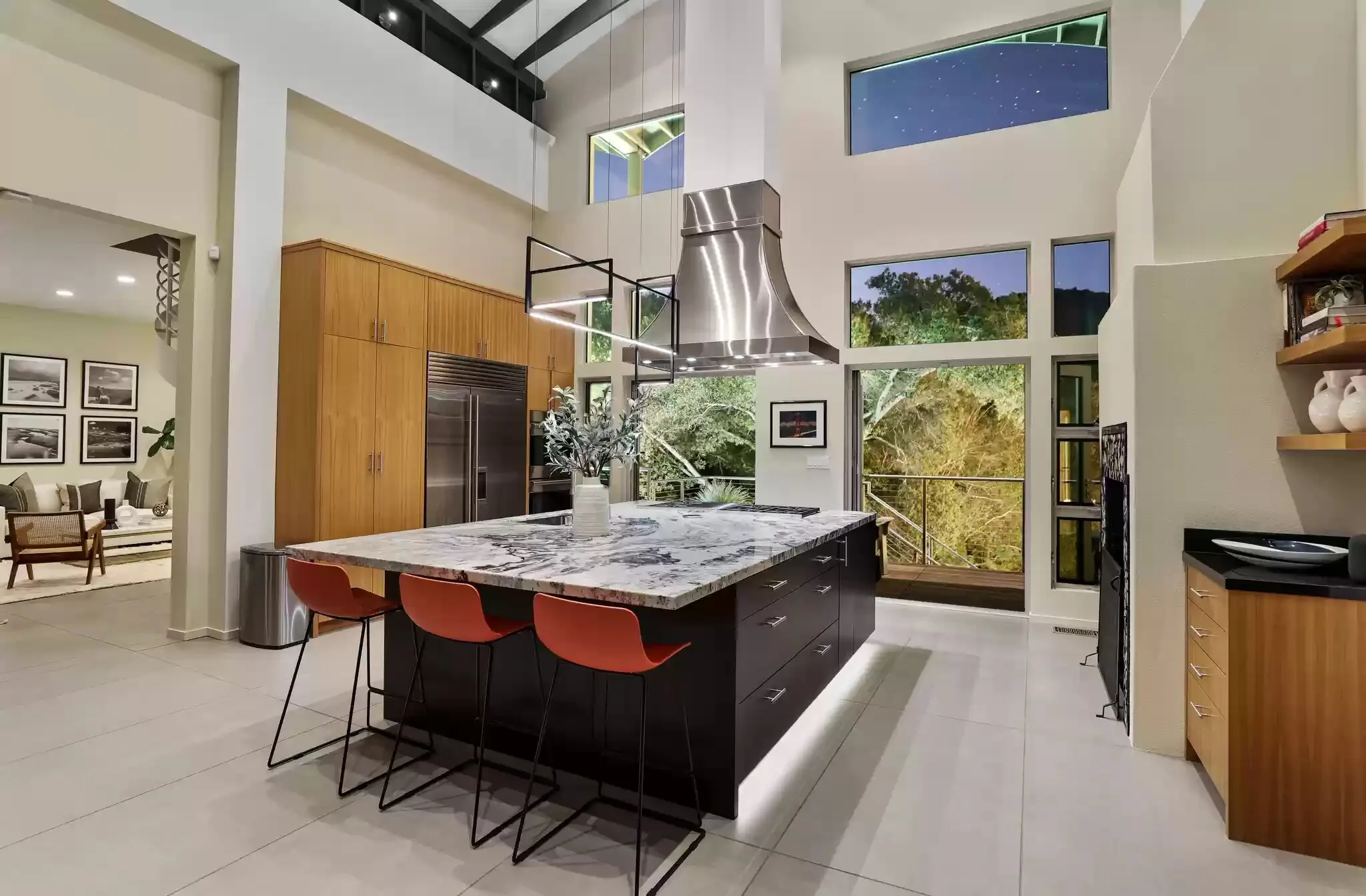
A large sink, broad range, or island can dominate a compact room. Compare each item with the remaining preparation space and circulation. Review door and drawer swings together. If seating is important, test how an occupied chair affects the route through the room. A smaller feature in the right position may provide more overall usefulness.
Keep the visual decisions coherent
Compare cabinet, countertop, backsplash, and flooring samples as one group. A restrained palette can help the room feel connected, but it need not be entirely white. Consider where a patterned surface will be most effective, then let nearby finishes stay quieter. Larger samples help reveal whether the combination feels balanced in the actual room.
Resolve light and installation logistics
Think about light at the counter as well as general room lighting. Discuss electrical and plumbing changes before finalizing cabinets. Confirm delivery access, countertop installation requirements, and which work must happen before templating. In a small room, a modest change to a cabinet or fixture can affect several other details, so keep the drawings and selections coordinated.
Plan your next step
A compact kitchen can feel generous when work surfaces, storage, and circulation are carefully allocated. Use the renovation to remove daily friction first, then choose finishes that make the room feel like part of your home.
For help with tile installation or custom stone surfaces, contact DC Tile and Stone to discuss your project.