
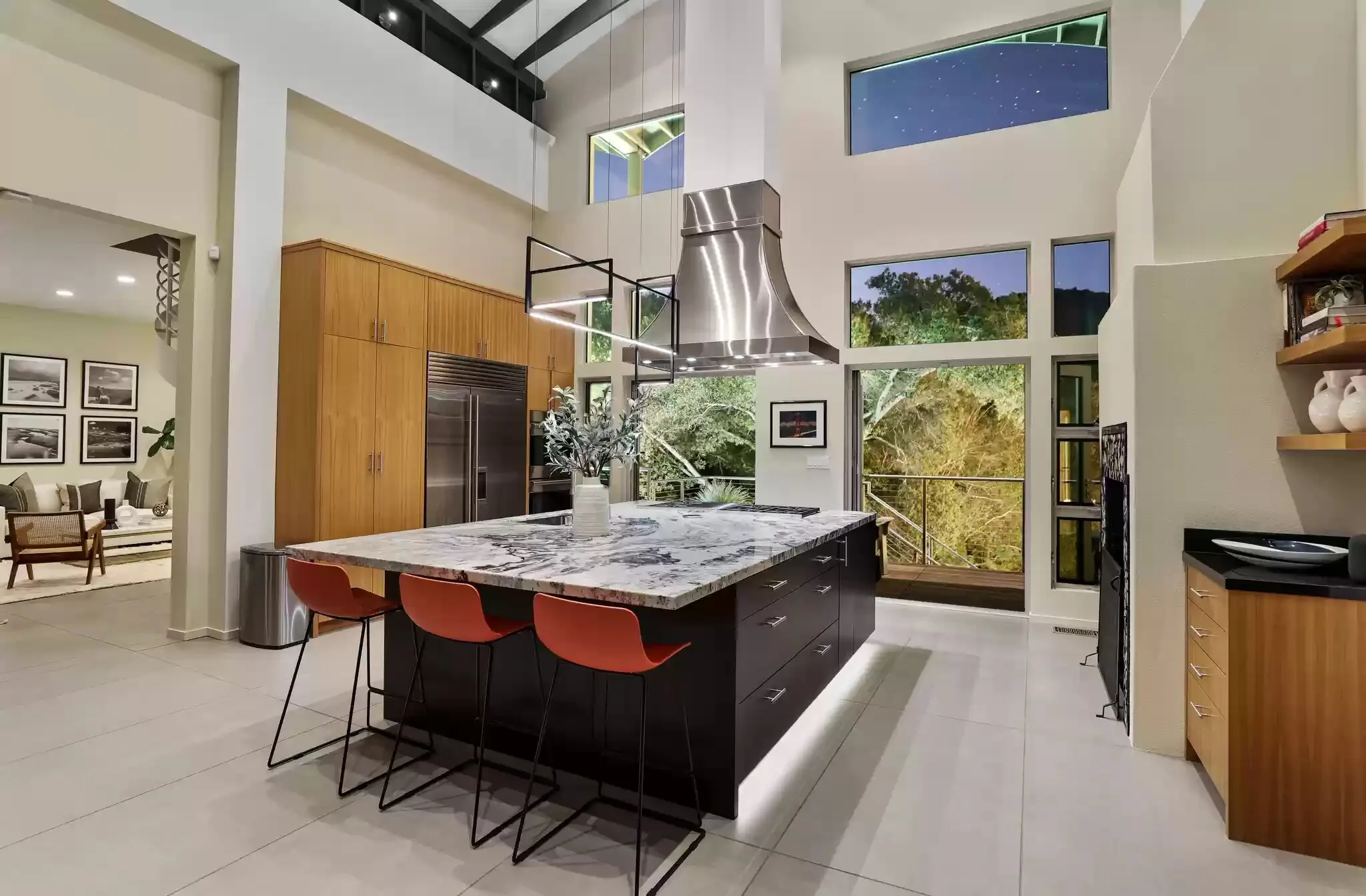
The best kitchen layout depends on how the room is used, where people enter it, and what the existing space can comfortably hold. Before choosing an island or adding cabinetry, map the tasks you repeat every day. A practical layout reduces unnecessary crossings and gives cooking, cleaning, and storage clear places to happen.
Give each task a useful zone
Place preparation tools near a workable counter, keep everyday dishes convenient to the place they are washed or served, and consider where groceries arrive. A second cook or a child making breakfast may need a separate landing area. Think in complete sequences rather than isolated appliance locations: take out ingredients, prepare them, cook, serve, and clean up.
Compare the layouts your room can support
A galley can concentrate work along two runs, while an L-shaped arrangement can leave part of the room open. A U-shaped kitchen can provide several work surfaces, but corners and circulation need attention. None is automatically superior. Sketch the available options with real cabinet and appliance dimensions before deciding that a particular shape is essential.
Earn the island
An island should improve the layout enough to justify the space it occupies. Consider its intended job: preparation, seating, storage, or a combination. Check appliance doors, drawer access, and the route around occupied stools. If an island makes those movements awkward, a peninsula, a narrower freestanding piece, or an uninterrupted perimeter counter may serve the room better.
Keep useful counters where work happens
A large total counter area is less helpful if it is broken into small fragments far from the sink or cooking zone. Identify the stretch you will use most and protect it from permanent appliance clutter. When choosing stone, review seam placement and any cutouts in relation to that primary work area. Discuss supports and overhangs before approving fabrication.
Test the plan with ordinary inconveniences
Imagine unloading the dishwasher while another person cooks. Open the refrigerator in the drawing and consider the route to the dining table. Think about waste and recycling access during preparation. These everyday tests often reveal more than an attractive rendering. Record the conflicts and revise the plan while moving a line is still easy.
Plan your next step
Choose the layout that supports your household, then refine the cabinetry and countertop details around it. An efficient kitchen is one where the space you have does the work you need, without unnecessary obstacles.
For help with tile installation or custom stone surfaces, contact DC Tile and Stone to discuss your project.