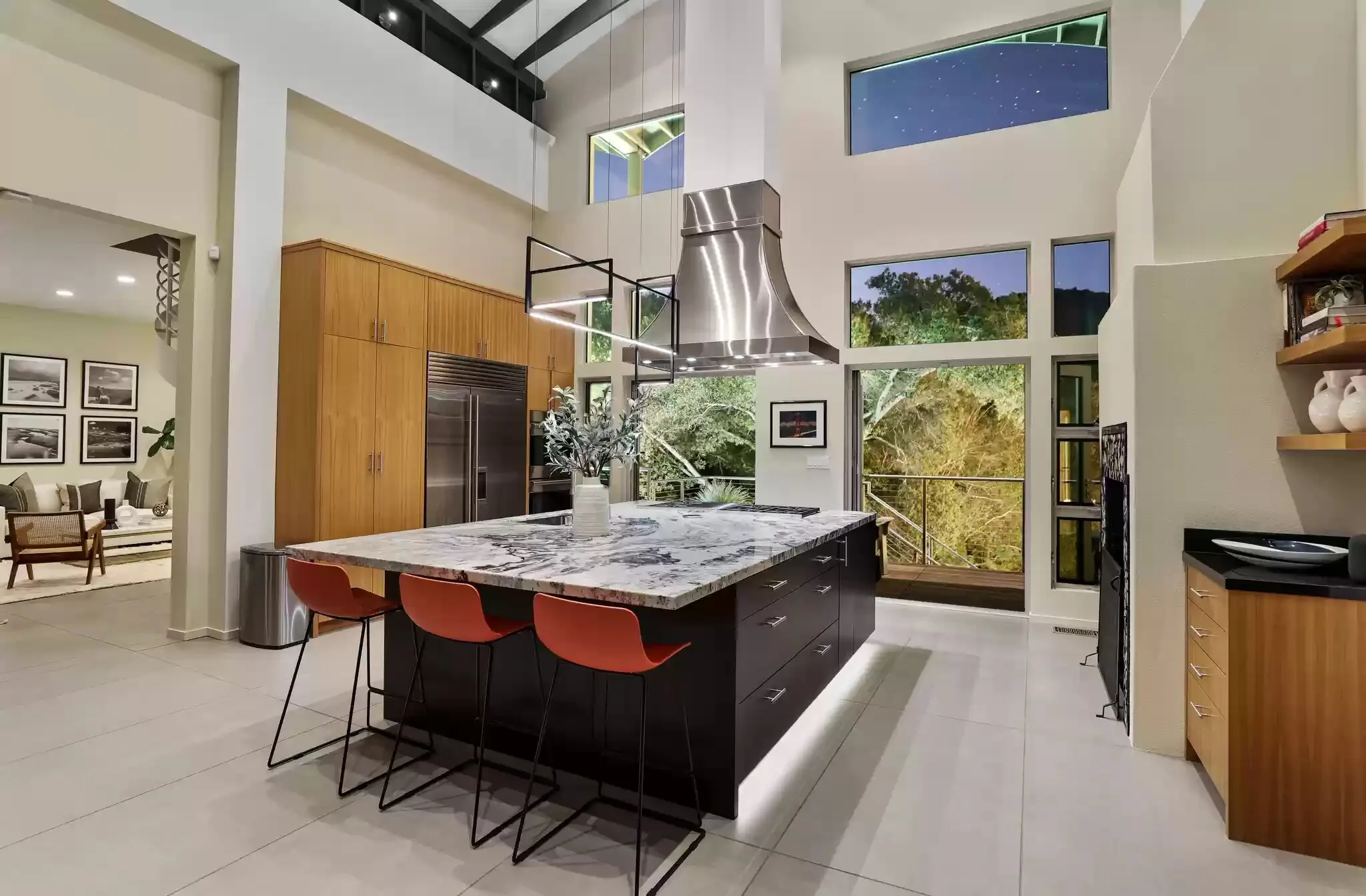
Kitchens and bathrooms ask beautiful materials to do practical work every day. A successful design makes those demands part of the plan: storage near the point of use, surfaces chosen for their setting, and details that are straightforward to clean. Elegance follows naturally when the room works well and the materials feel connected.
Begin with routines and obstacles
In the kitchen, notice where preparation, cooking, washing, and storage overlap. In the bathroom, consider the path between the door, vanity, toilet, and shower. Record awkward reaches, crowded corners, and places where toiletries or appliances collect. These observations give the design a useful brief before you start choosing finishes.
Create a shared material language
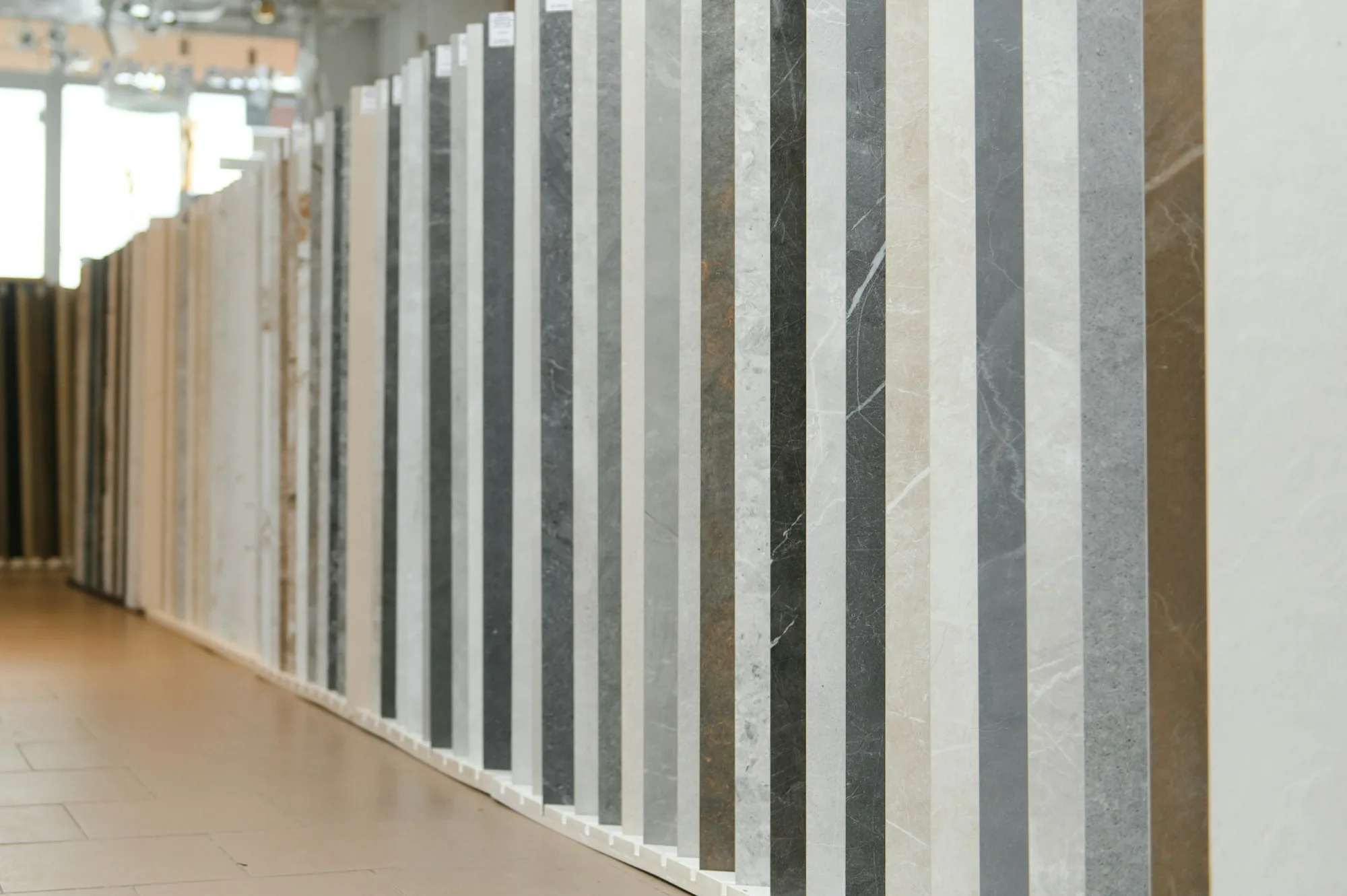
A home does not need identical finishes in every room to feel cohesive. You might repeat a warm stone tone, a simple tile shape, or a restrained metal finish while varying scale and texture. Compare selections together under the lighting intended for each room. A material that looks neutral in a showroom may read warmer or cooler at home.
Match the surface to the location
A kitchen worktop, shower wall, and bathroom floor have different demands. Ask about the exact product, finish, care routine, and approved applications before treating one material as a solution everywhere. Bring the installer into the selection process early, especially when the design includes large panels, unusual cuts, or wet-area details.
Integrate storage into the composition
Plan drawer interiors, cabinet heights, and places for daily essentials before finalizing visible details. In a bathroom, think about where towels and bottles will sit when the room is in use. In a kitchen, avoid making a decorative shelf the only home for everyday items. Useful storage lets the room retain its intended appearance between special occasions.
Resolve the junctions
Pay attention to the meeting points: tile against a cabinet, countertop against a wall, and shower finishes around a niche or door. Discuss edge treatments, trim, seams, and fixture positions on drawings. These small decisions have an outsized effect on whether the finished room feels considered. They are also easier to coordinate before materials are cut.
Plan your next step
The strongest kitchen and bath designs give every attractive feature a practical role. Start with your household, choose a clear material palette, and resolve the construction details with the people who will build the room.
For help with tile installation or custom stone surfaces, contact DC Tile and Stone to discuss your project.